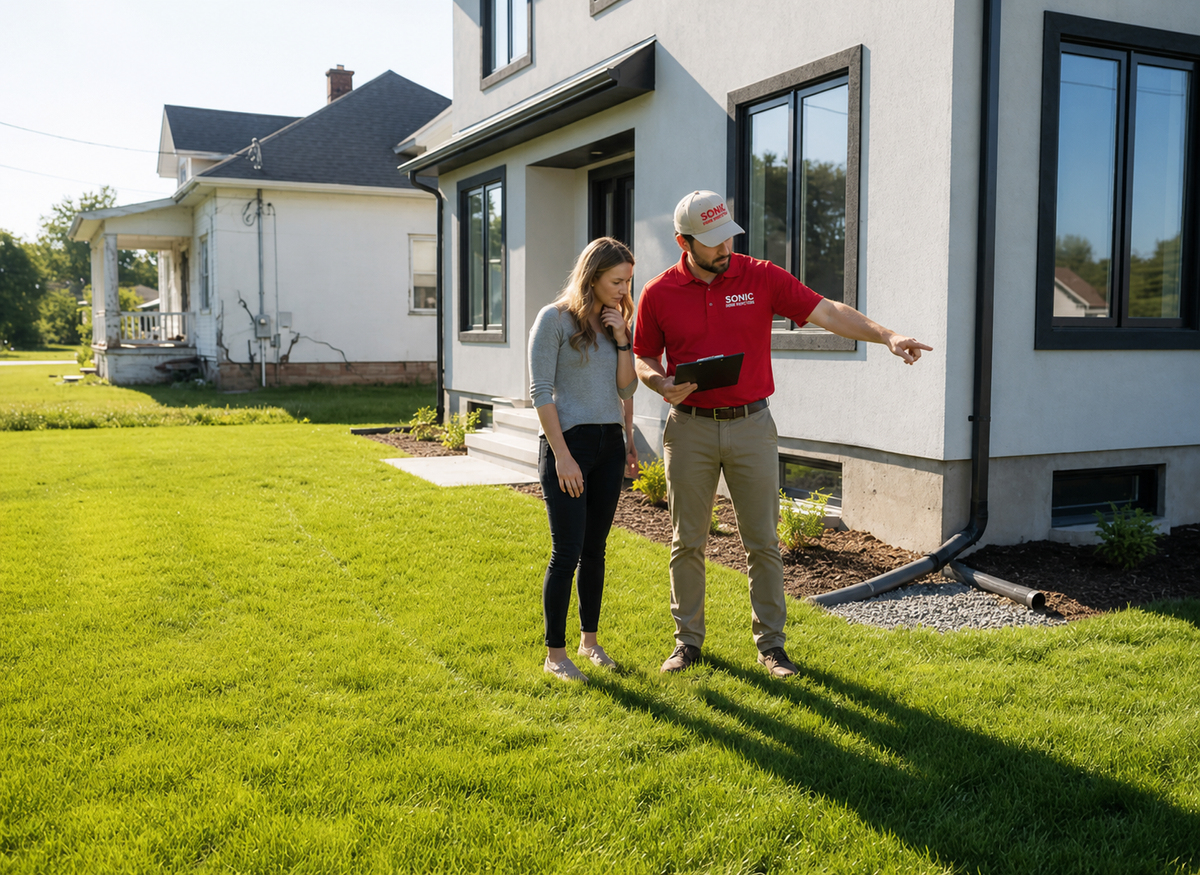
When considering a home purchase, many aspects capture a buyer's attention, from the kitchen's appeal to the size of the backyard. However, some of the most critical components for a home's long-term health and your peace of mind lie beneath the surface – specifically, the property's grading and drainage. These often-overlooked elements play a vital role in protecting your investment from water damage, a silent but destructive force. At Sonic Home Inspections, we believe that understanding these systems is fundamental to making an informed buying decision.
Understanding Proper Grading
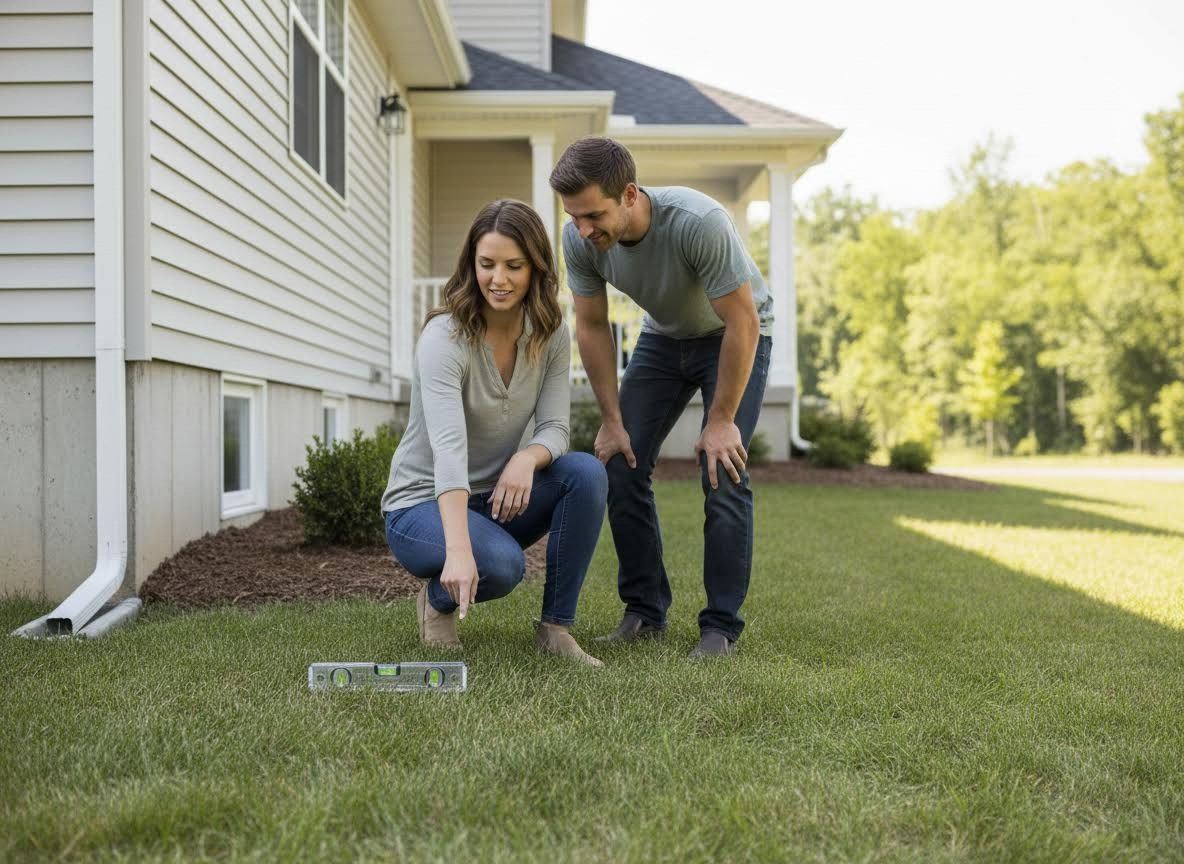
Proper grading refers to the slope of the land surrounding a house, which should gently fall away from the foundation on all sides. This seemingly simple design principle is incredibly effective in directing rainwater and snowmelt away from the home's perimeter. When grading is incorrect, meaning the ground slopes towards the foundation or is flat, water can accumulate. This pooling water can saturate the soil directly against the foundation walls, leading to hydrostatic pressure, which can cause cracks, leaks, and even structural damage over time. A well-graded property acts as a natural barrier, ensuring water runoff is diverted to appropriate areas, such as street drains or designated runoff zones.
The Role of Effective Drainage Systems
While proper grading is the first line of defense, effective drainage systems provide additional layers of protection. These systems are designed to capture and redirect water that might not be handled by grading alone, or to manage water from specific sources like roofs. Key components include gutters and downspouts, which collect rainwater from the roof and channel it away from the foundation, ideally at least six feet from the exterior walls. Other drainage solutions might involve French drains, which are trenches filled with gravel and a perforated pipe, designed to collect subsurface water and direct it away. Swales, which are shallow depressions in the landscape, can also be used to guide surface water flow. Each of these systems works in concert to prevent water saturation around the foundation and basement areas.

Potential Problems of Poor Grading and Drainage
The consequences of inadequate grading and drainage can be significant and costly for homeowners. The most common issues include foundation problems, such as cracks, bowing walls, and settlement, which can compromise the structural integrity of the entire house. Water penetration into basements or crawl spaces is another frequent problem, leading to dampness, musty odors, and potential flooding. This excess moisture creates an ideal environment for mold and mildew growth, posing health risks and depreciating the home's value. Furthermore, poor drainage can attract pests like termites and carpenter ants, which thrive in moist conditions, and can also lead to landscape erosion, damaging pathways and garden areas. Identifying these issues early is crucial to avoiding expensive repairs down the line.
Protecting Your Investment with Expert Evaluation
Understanding the condition of a home's grading and drainage is not just about avoiding immediate repairs; it's about safeguarding your entire property from the long-term effects of water damage. These systems are the first line of defense against issues that can be both costly and detrimental to structural integrity, indoor air quality, and overall home value. By having these critical elements expertly evaluated, you gain invaluable insight into potential long-term concerns, empowering you to make a confident home-buying decision. For a comprehensive assessment that provides clarity and peace of mind regarding your future home, we encourage you to learn more about our detailed inspection services.